
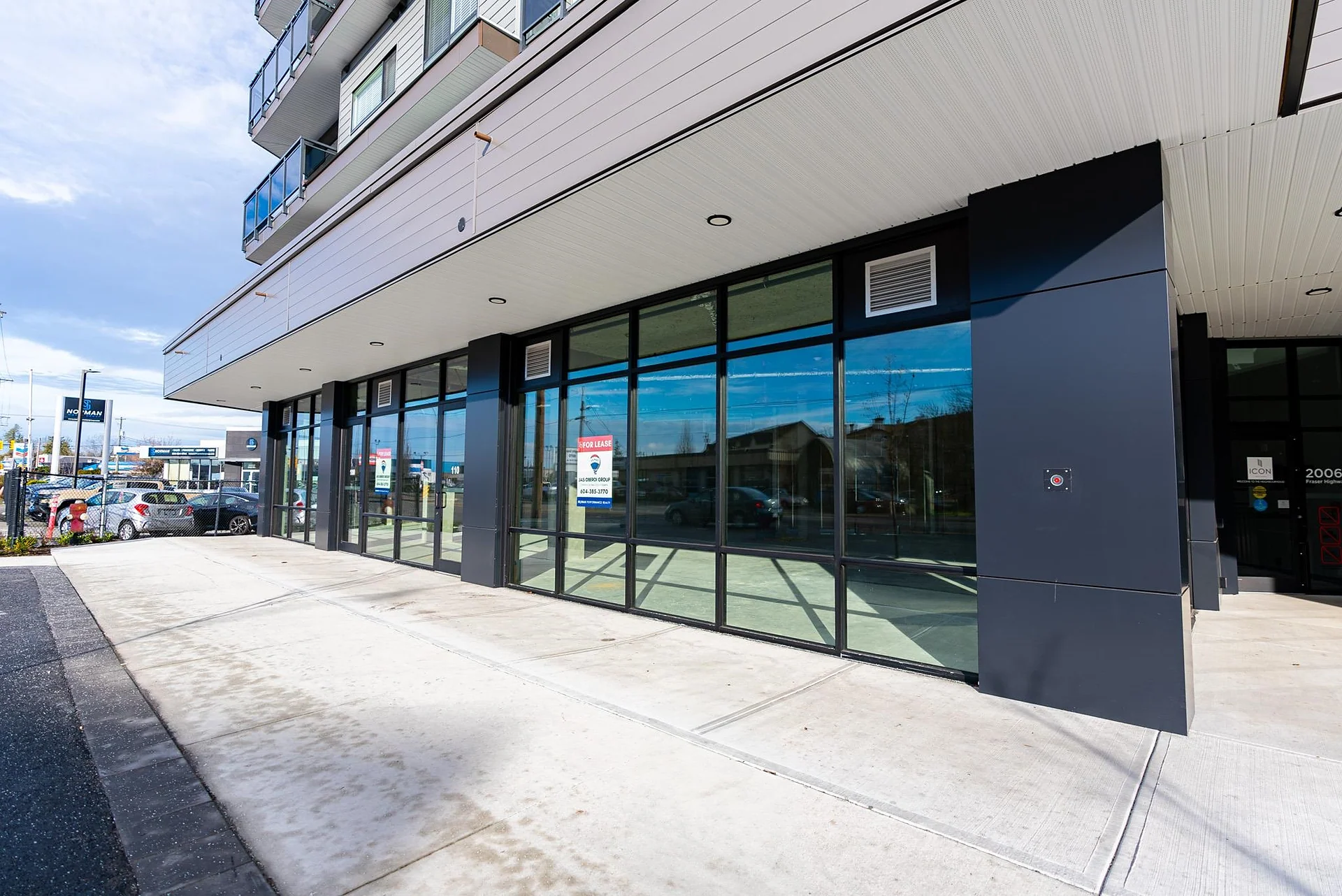
Most commercial space in White Rock is leased on a triple net basis. You pay a base rent quoted per square foot per year, plus additional rent for your share of property tax, insurance and building operating costs, plus 5% GST on the total. The landlord usually pays the leasing commission, so having your own representative normally costs a tenant nothing directly.
Before you sign anything, it helps to know how each piece of the rent is built, what the lease can lock you into, and what the City of White Rock needs from you before you open. A commercial realtor in White Rock who works for you as the tenant can compare units on the same basis and negotiate the terms that matter most to your business.
We are The Oberoi Group, a RE/MAX team ranked in the Top 3 Commercial Teams across Canada at RE/MAX by commission in 2025, and our office is on Foster Street in uptown White Rock. This guide covers what we walk tenants through before they commit to a space.
Triple net, gross and semi-gross leases
The lease type decides who carries the cost of running the building.
- Triple net (NNN). You pay base rent plus your proportionate share of property tax, building insurance and common area maintenance. This is the most common structure for retail, office and industrial space across Metro Vancouver and the Fraser Valley, including White Rock.
- Gross. You pay one figure and the landlord covers taxes and operating costs out of it. True gross leases are less common in commercial property and tend to show up in small offices, shared suites or short terms.
- Semi-gross or modified gross. A middle ground. The landlord may include some costs, such as taxes, while you pay others, such as your own utilities and interior maintenance. The exact split is whatever the lease says, so read it line by line.
A gross rent can look expensive next to a net rent until you add the additional rent to the net figure. Always compare the total cost per square foot, not the headline number.
What additional rent covers
Additional rent, sometimes called CAM (common area maintenance) or operating costs, is your share of the costs to own and run the property. It is usually charged monthly as an estimate and reconciled once a year against actual costs, which means you can receive a bill or a credit after year end. It commonly includes:
- Property taxes on the building and land.
- Building insurance.
- Repairs and maintenance of common areas, roof, parking lot and landscaping.
- Snow and garbage removal, common area utilities and security.
- A management or administration fee, often a percentage of the other costs.
Your share is normally your unit's area divided by the leasable area of the building. Ask the landlord for the current year's estimate and last year's actual costs, and ask what is excluded. Costs that are often negotiated include major structural repairs, roof replacement and capital upgrades, which some landlords try to recover from tenants over time.
How commercial rent is quoted in BC
Commercial rent in BC is almost always quoted per square foot per year, on a net basis. To get your monthly cost, add the base rent and the additional rent per square foot, multiply by the unit size, and divide by 12. Then add GST.
For example, using made-up round numbers only to show the math: a 1,000 square foot unit with base rent of $30 and additional rent of $12 would cost $42,000 a year, or $3,500 a month, before GST. Your real figures will depend on the building, the location and the timing.
Check how the space was measured. Some landlords quote rentable area, which includes a share of common hallways and washrooms, while your usable floor space is smaller. Base rent also usually steps up during the term, either by a fixed amount per square foot or on a set schedule.
GST on commercial rent
The Canada Revenue Agency treats a lease of commercial real property as a taxable supply, so GST applies to commercial rent in BC at 5%. That includes additional rent. The CRA's guidance says that when a tenant pays property tax to the landlord as a separate amount, it is part of the rent and is taxed the same way as base rent. There is no PST on the rent itself.
If your business is a GST registrant, you can usually claim the GST you pay on rent as an input tax credit. Ask your accountant how this works for you, and make sure the lease states whether rents are shown before or after GST. For more on how GST works when you buy rather than lease, see our guide to GST on commercial property in BC.
Lease terms worth negotiating
Most commercial leases start with an offer to lease, which sets out the business terms before the full lease is drafted. That is where most of the value is won or lost.
Term and renewal options
Small retail and office leases usually run for a few years, often with one or more options to renew. An option protects your location if the business does well. Check how renewal rent is set, usually at the market rate at that time, and the notice period to exercise it. Miss the date and the option can be lost.
Personal guarantee
Landlords often ask the owners of a new or small company to guarantee the lease personally. You can ask to cap the guarantee at a set number of months of rent, or have it fall away after a period of on-time payments.
Tenant improvement allowance and free rent
A landlord may pay a tenant improvement allowance toward your build-out, deliver the unit with some work done, or give a fixed-rent-free period while you build. Free base rent is common, but you may still be charged additional rent during that period, so confirm what is free.
Use, exclusivity and assignment
Make sure the permitted use clause covers everything you plan to do. In a plaza, ask for an exclusive so a direct competitor cannot open next door. Also check whether you can assign the lease or sublet if you sell the business.
We cover the Surrey side of these negotiations on our commercial lease in Surrey page.
Who pays the lease commission
In most commercial leases the landlord pays the commission under its listing agreement with its brokerage. A common practice is to calculate it as a percentage of the net rent over the lease term, though there is no rate set by law and the details are negotiated. When you bring your own realtor, that commission is typically shared between the landlord's brokerage and yours.
The agent on the sign works for the landlord. In BC a real estate licensee must tell you in writing who they represent before providing services. A tenant representative works only for you: building your requirement, comparing options and pushing for better rent, allowances and terms. Our article on who pays the commercial lease commission explains the exceptions, such as owner-direct listings.
White Rock specifics before you sign
Zoning
Commercial space in White Rock sits mainly in the CR zones of Zoning Bylaw No. 2506: CR-1 Town Centre Area Commercial / Residential, CR-2 Lower Town Centre Area Commercial / Residential, CR-3 West Beach Business Area, CR-4 East Beach Business Area, CR-5 Neighborhood Commercial and CR-6 Gas Bar/Convenience Commercial. Many newer buildings are on site-specific Comprehensive Development (CD) zones instead. Permitted uses differ by zone, so confirm your exact use is allowed before you waive any conditions.
Business licence
You need a City of White Rock business licence to operate, and you apply through the City's MyWhiteRock online portal. The City asks you to check zoning first, provide a floor plan, and get a building permit if you are altering the unit. Your business may also need fire and building inspections before the licence is issued. Most signs, including fascia signs and sandwich boards, need a separate sign permit under the Sign Bylaw.
Uptown versus Marine Drive
Uptown along Johnston Road serves residents year round: professional offices, clinics, services, cafes and everyday retail. Marine Drive faces the beach and the pier, and its restaurants and shops depend heavily on visitors, so sales tend to swing with the seasons and the weather. If you lease on the waterfront, plan your cash flow for quieter winter months.
Parking
The City runs waterfront pay parking along Marine Drive year round, from 10 a.m. to midnight, with higher summer rates from March to October (City of White Rock, checked October 2026). Marine Drive businesses can buy a Waterfront Commercial Merchant decal. Uptown, ask the landlord how many stalls come with your unit and whether customers share them.
Checklist before you sign a commercial lease
- Confirm the zoning allows your use, and that a business licence and sign permit are realistic.
- Get the total cost per square foot: base rent, additional rent estimate, last year's actual costs and GST.
- Check how the space was measured and what is excluded from operating costs.
- Know the term, rent steps, renewal options and notice dates.
- Negotiate the personal guarantee, improvement allowance and free rent period in writing.
- Confirm the possession date, fit-out time and rent start date line up.
- Check parking, signage rights, exclusive use and assignment rights.
- Have a lawyer review the full lease before you sign.
If you are weighing whether to lease at all, compare the numbers in buying vs leasing commercial space and see how businesses buy their own premises in our guide to owner-occupied commercial property.
Looking for space uptown or by the water? Talk to a commercial realtor in White Rock who represents you, not the landlord. Call The Oberoi Group at 604-385-3770 or book a free 15-minute call, and we will walk through your requirement and the units that fit it.
Frequently asked questions
What does triple net mean in a BC commercial lease?
The tenant pays base rent plus a share of the property tax, building insurance and common area maintenance. Those extra costs are usually billed monthly as additional rent and reconciled once a year.
Is GST charged on commercial rent in BC?
Yes. The CRA treats a lease of commercial real property as a taxable supply, so 5% GST applies to base rent and additional rent. GST registrants can usually claim it back as an input tax credit.
Does a tenant pay a realtor to find commercial space?
Usually not directly. In most commercial leases the landlord pays the commission, and it is shared with the tenant's brokerage. Confirm the arrangement in writing before you start touring.
Do I need a business licence to open in White Rock?
Yes. The City of White Rock requires a business licence, applied for through its MyWhiteRock portal. Check that your use is allowed by the zoning first.
Can I negotiate a personal guarantee?
Often, yes. Tenants commonly ask to cap the guarantee at a set number of months of rent or have it end after a period of on-time payments. Your lawyer should review the final wording.
Sources
Rates, thresholds and program rules in this article were checked against these official pages on October 22, 2026. Rules change, so confirm current details before you act.