
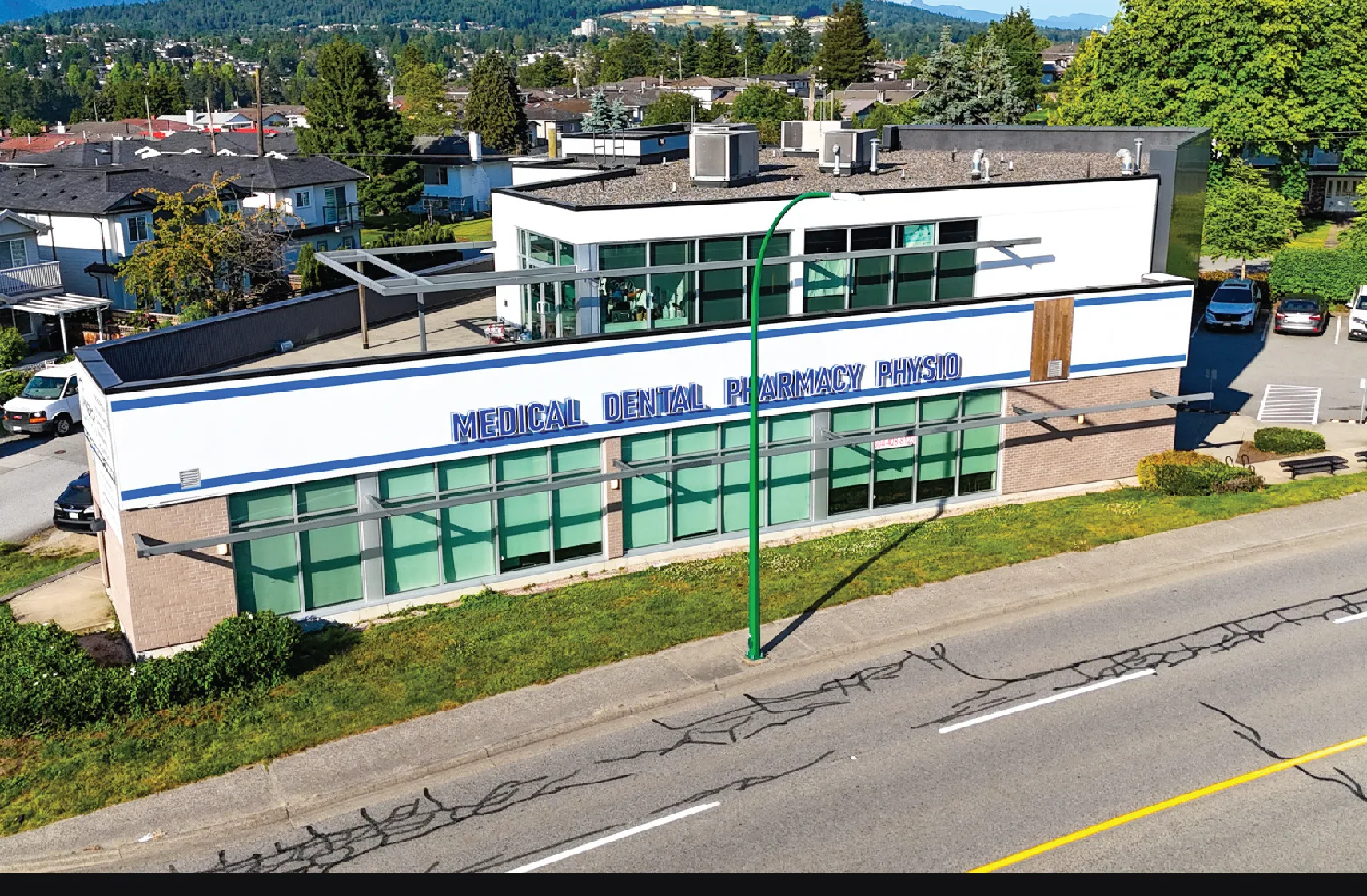
Metro Vancouver's commercial market is heading into 2027 split in two. Industrial space is tightening again: Colliers reported regional industrial vacancy of 2.6% in the third quarter of 2026, with availability down to 3.7%. Office is moving the other way, with downtown Vancouver vacancy at 12.2% and suburban vacancy at 7.9%. Across Canada, CBRE's mid-2026 survey showed average cap rates edging lower for the first half of the year, and the Bank of Canada has held its policy rate at 2.25% since late 2025. This outlook explains what those numbers mean for buyers, where we see value, and what to watch as 2027 begins.
What is happening to vacancy in Metro Vancouver?
Vacancy tells you how hard a building will be to keep full, and that feeds straight into price. Colliers' third-quarter 2026 national market snapshot, released on October 8, 2026, gives the clearest current picture.
- Industrial. Regional vacancy fell half a percentage point in the quarter to 2.6%, and availability dropped 0.7 points to 3.7%. Colliers said it was the first time in ten quarters that vacancy was below 3% and availability below 4% at the same time. The region absorbed nearly 1.3 million square feet of industrial space in the quarter, helped by large leases such as 411,417 square feet at 18111 Blundell Road in Richmond.
- Downtown office. Vacancy rose to 12.2%, one of the highest readings for downtown Vancouver in more than 20 years, according to Colliers. New listings added space faster than tenants took it.
- Suburban office. Vacancy rose to 7.9%. Surrey's office vacancy was about 7.6%, and Burnaby and Richmond saw relatively strong leasing even as new buildings and listings pushed their numbers around. Colliers noted that suburban tenants tend to be smaller and more stable.
The office market recorded about 350,000 square feet of negative absorption across the region in the quarter, largely because more space came to market rather than because tenants left in large numbers.
Where are cap rates heading?
A cap rate is a property's net operating income divided by its price. A lower cap rate means buyers are paying more for each dollar of income. If you are new to the term, our guide to cap rates in Surrey and BC walks through the math.
CBRE's Canadian cap rate survey for the second quarter of 2026 put the national average across all property types at 6.58%, down 3 basis points from the quarter before. Retail and seniors housing led the decline, office and industrial eased slightly, and multifamily and hotel yields were roughly flat. In plain terms, pricing firmed a little in the first half of 2026 after two years of adjustment.
Metro Vancouver usually trades at lower cap rates than the national average because land is scarce and demand from owner-users and private investors is deep. But averages hide a wide range. A newer industrial building leased to a strong tenant, a neighbourhood retail centre with a grocery or pharmacy anchor, and an older suburban office building with near-term lease expiries can all sit in the same city at very different yields. Before you rely on any market figure, ask for recent comparable sales of your asset type in your submarket. That is the work we do with every buyer before an offer.
What does each asset class look like going into 2027?
Industrial
Industrial remains the most competitive asset class in the region. Low vacancy keeps owner-users and investors bidding for the same buildings, especially small and mid-size units that a business can occupy itself. Colliers also points to a shift in demand toward manufacturing, research and development and defence-related uses, on top of logistics. For buyers, the challenge is less about finding demand and more about paying a price that still makes sense if rent growth slows.
Retail
Well-leased neighbourhood retail has held up well, and CBRE's survey showed retail leading cap rate compression nationally in the second quarter of 2026. Centres anchored by daily-needs tenants such as grocery, pharmacy, medical and quick-service food tend to attract the most interest. If you are weighing a plaza, our guide on how to evaluate a commercial plaza covers the rent roll and lease checks that matter.
Office
Office is where buyers have the most negotiating room, and where the risk is highest. Downtown vacancy above 12% means landlords compete for tenants with incentives and improvement allowances. Suburban office near transit is in better shape. Owner-users, such as professional firms and medical practices that want to stop paying rent, can sometimes buy strata office space on better terms than a year or two ago.
Multifamily
Purpose-built rental buildings remain in demand from long-term investors. Financing is the deciding factor: CMHC's MLI Select program can allow very high loan-to-value ratios and long amortizations for qualifying buildings with five or more units, which changes the price a buyer can support. Our CMHC MLI Select financing page explains how the program works.
What will interest rates do?
The Bank of Canada held its overnight rate at 2.25% at its September 2, 2026 decision, the same level it has held since its last cut on October 29, 2025. Its remaining decisions for 2026 are on October 28 and December 9. We do not forecast rate moves, and neither should anyone selling you a property. What matters for a buyer is whether the deal works at today's financing cost, with room to spare if rates do not fall further.
Colliers also flagged a second source of caution this fall. With municipal and provincial elections underway in British Columbia, some businesses are delaying long-term real estate decisions. That can slow leasing in the short term and give prepared buyers a quieter market to work in.
Where are buyers finding value?
Every deal is different, but these are the areas where our clients are asking the most questions heading into 2027:
- Owner-occupied industrial and strata units. Businesses tired of rising rent are buying the space they use. Tight vacancy supports values, and owning removes the risk of a large rent increase at renewal. See our page on buying property for your business.
- Suburban office with stable tenants. Lower vacancy than downtown, with pricing that has adjusted since 2023.
- Necessity-based retail. Centres where tenants serve the surrounding neighbourhood every day.
- Transit corridors in Surrey and Langley. The Surrey Langley SkyTrain extension is scheduled to open in late 2029, and provincial transit-oriented area rules already allow more density near its stations. Our guide to Surrey's SkyTrain growth corridors explains what that means for commercial land.
Many buyers also compare Vancouver with Surrey, where taxes and prices per square foot are lower. Our side-by-side guide to Vancouver vs Surrey commercial real estate covers that decision.
How we help buyers in this market
The Oberoi Group ranked among the Top 3 commercial teams across Canada at RE/MAX in 2025, based on commission, and the team has more than $900M in career sales. We help investors and business owners buy offices, retail plazas, industrial buildings, land and businesses across Metro Vancouver and the Fraser Valley, and we will refresh this outlook every year as new data comes in.
If you are planning a purchase in 2027, start with our page on commercial real estate in Vancouver, then book a commercial strategy call. We will look at your goals, your financing and the current comparables for the type of property you want, before you spend time on listings. You can also read about real estate investing in BC and our work with commercial plazas.
Frequently asked questions
What is the office vacancy rate in Vancouver?
Colliers reported downtown Vancouver office vacancy of 12.2% and suburban Metro Vancouver vacancy of 7.9% in the third quarter of 2026. Surrey was about 7.6%.
What is the industrial vacancy rate in Metro Vancouver?
Colliers reported 2.6% industrial vacancy and 3.7% availability in the third quarter of 2026, the first time in ten quarters that both were below 3% and 4%.
Are commercial cap rates going up or down in Canada?
CBRE reported the national average cap rate across all property types at 6.58% in the second quarter of 2026, down 3 basis points from the previous quarter, led by retail and seniors housing.
What is the Bank of Canada rate right now?
The Bank of Canada held its policy rate at 2.25% on September 2, 2026. Its next decisions in 2026 are on October 28 and December 9.
Which commercial property types are buyers looking at in 2027?
Owner-occupied industrial and strata units, suburban office with stable tenants, necessity-based retail, and sites near the Surrey Langley SkyTrain stations are drawing the most questions from our clients.
Sources
Rates, thresholds and program rules in this article were checked against these official pages on October 16, 2026. Rules change, so confirm current details before you act.